
Mixing Flooring Materials Without Making Your Home Look Disjointed
Mixing flooring materials is one of the most effective ways to add character and functionality to a home. It allows homeowners to choose the right surface for each room, highlight architectural features, and create visual interest throughout the space. However, when it’s done without a plan, the result can feel choppy, disconnected, or unfinished.
The goal of mixing flooring materials isn’t to make every room identical, but to make the entire home feel cohesive. With the right approach, different flooring types can flow naturally from one space to the next without distracting transitions or awkward contrasts.
At Cincy Preferred Flooring, we help homeowners throughout the Cincinnati area choose and install flooring combinations that feel intentional, balanced, and built to last.
Why Homeowners Mix Flooring Materials
There are plenty of good reasons to use more than one type of flooring in a home. Different rooms serve different purposes, and the flooring needs to match each space in use.
Kitchens and bathrooms benefit from moisture-resistant surfaces, while living rooms and bedrooms often call for warmth and comfort. Entryways and mudrooms need durability, while basements may require flooring that handles temperature changes and moisture.
Mixing flooring materials allows homeowners to prioritize performance without sacrificing style, as long as the transitions are handled thoughtfully.
Start With a Whole-Home Perspective
One of the biggest mistakes homeowners make when mixing flooring materials is choosing each room in isolation. When every space is designed separately, the home can feel disjointed.
Instead, it’s important to step back and look at the entire floor plan. Consider sightlines, room connections, and how people move through the space. Flooring choices should complement each other across rooms, especially in open or semi-open layouts.
Even when different materials are used, they should feel like they belong to the same design family.
Limit the Number of Flooring Types
Variety is good, but too much variety creates visual clutter. As a general rule, most homes benefit from limiting flooring to two or three main materials.
For example, hardwood or luxury vinyl plank may run through common living areas, with tile reserved for bathrooms and laundry rooms. Bedrooms might use carpet, while basements use a moisture-resistant alternative. Keeping the number of materials under control helps maintain continuity and prevents the home from feeling busy or uncoordinated.
Choose Complementary Colors and Tones
Color plays a major role in whether mixing flooring materials feels cohesive or chaotic. Even when materials differ, their tones should work together.
Warm-toned woods tend to pair well with warm-toned tile or stone, while cooler tones should be grouped together when possible. Strong contrasts can work, but they should be intentional and balanced throughout the home.
Neutral flooring colors often provide more flexibility, making it easier to mix materials without overwhelming the space.
Pay Attention to Flooring Transitions
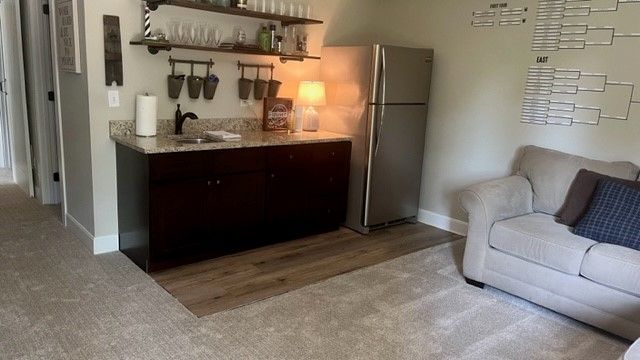
Transitions are where mixed flooring succeeds or fails. Poorly planned transitions draw attention to the wrong things, while well-executed transitions make the transition between materials feel natural. Transitions should align with doorways, room boundaries, or architectural breaks whenever possible. Abrupt changes in the middle of open spaces tend to feel awkward. Using clean transition strips, flush transitions, or thoughtfully designed patterns can help different materials flow together seamlessly.
Keep Flooring Thickness in Mind
Different flooring materials often have different thicknesses, which can create uneven surfaces if not addressed properly. Height differences between rooms aren’t just a visual issue—they can also become a tripping hazard. Professional installation ensures subfloors are leveled correctly, and transitions are smooth. This is especially important when mixing tile with wood, vinyl, or carpet. Proper preparation behind the scenes makes a noticeable difference in how polished the final result feels.
Use Flooring to Define Spaces, Not Divide Them
In open floor plans, flooring can be used to define functional zones without adding walls. For example, tile may distinguish a kitchen area while wood or vinyl defines the living space. The key is subtlety. Flooring changes should guide the eye, not interrupt it. Maintaining consistent color tones, plank direction, or grout color helps keep the space unified. When done well, flooring transitions enhance flow rather than break it.
Maintain Consistent Plank Direction
Plank direction is often overlooked, but it plays a big role in how cohesive a space feels. Running planks in the same direction across connected rooms creates a sense of continuity, even when materials change. Inconsistent plank direction can make rooms feel smaller or disjointed, especially in hallways and open areas. A consistent layout helps tie everything together visually. Professional installers consider plank direction early in the planning process to avoid awkward transitions later.
Balance Visual Weight Across Rooms
Some flooring materials naturally draw more attention than others. Bold tile patterns, dark woods, or textured surfaces can dominate a space if not balanced properly. When mixing flooring materials, it helps to distribute visual weight evenly. If one area features a bold floor, adjacent spaces should remain more neutral to avoid competition. This balance keeps the home feeling intentional rather than overwhelming.
Don’t Forget About Grout and Trim
Details matter when mixing flooring materials. Grout color, baseboards, and trim all contribute to how seamless transitions appear. Choosing grout that complements the surrounding flooring rather than contrasting sharply can help the tile blend more naturally into adjacent spaces. Consistent baseboards throughout the home also create a unifying element that ties different floors together.
These finishing touches often make the difference between a home that feels professionally designed and one that feels pieced together.
Match Flooring to Lifestyle, Not Just Style
While appearance is important, functionality should never be overlooked. High-traffic households, pets, and kids all place different demands on flooring. Mixing flooring materials allows homeowners to choose surfaces that suit each space’s needs without compromising the overall look. Durable materials in busy areas and softer surfaces in private spaces create a home that’s both practical and comfortable. A cohesive design doesn’t mean sacrificing performance.
Why Professional Guidance Matters
Mixing flooring materials successfully requires more than picking styles you like. It involves planning layout, transitions, subfloor preparation, and installation details that aren’t always obvious upfront.
Working with an experienced flooring professional helps homeowners avoid costly mistakes and ensures the finished result feels intentional. From material selection to final installation, professional guidance brings clarity to complex design decisions.
Cincy Preferred Flooring works with homeowners to design flooring layouts that balance aesthetics, durability, and long-term value.
Creating a Home That Feels Connected
Mixing flooring materials doesn’t have to result in a disjointed home. With thoughtful planning, consistent design choices, and professional installation, different flooring types can work together to create a cohesive, inviting space.
When flooring choices support both function and flow, the entire home benefits. Whether you’re remodeling a single room or updating multiple spaces, the right approach makes all the difference.
Cincy Preferred Flooring helps homeowners throughout the Cincinnati area create flooring solutions that look intentional, perform well, and stand the test of time.